How AI is Revolutionizing Healthcare
Discover how Artificial Intelligence is transforming modern medicine, from early disease detection to personalized treatment plans and robotic surgery.
Discover how Artificial Intelligence is transforming modern medicine, from early disease detection to personalized treatment plans and robotic surgery.
Artificial Intelligence (AI) has rapidly transitioned from a theoretical concept to a critical component of modern life. While its impact spans numerous industries, perhaps the most profound and life-saving applications are emerging in the medical field. From predicting patient outcomes with astonishing accuracy to discovering novel drug compounds in a fraction of the time, AI is not just assisting doctors — it is fundamentally transforming science and how we approach human health.
Let’s explore the core concepts that drives mordern medical field through AI, the real world applications and what kind of future is waiting ahead of us.
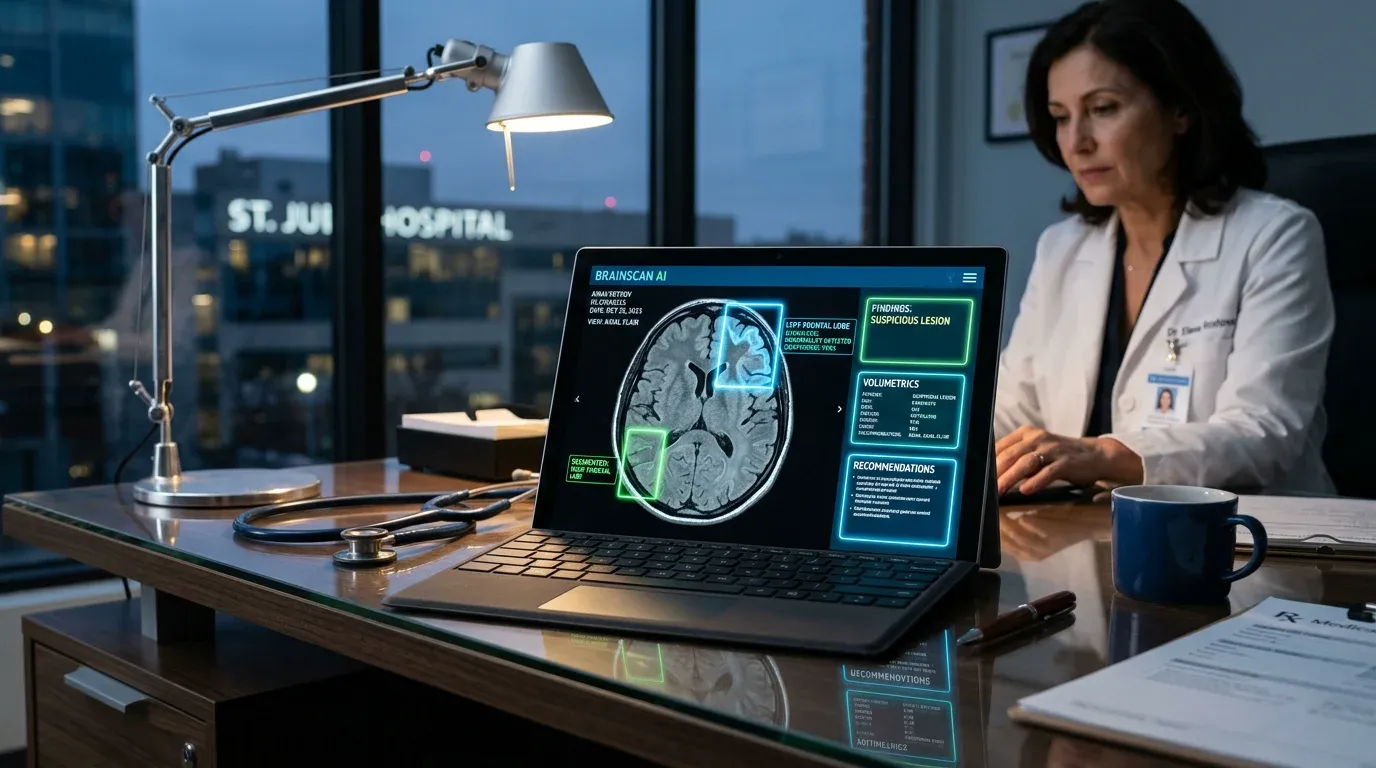
There integration of AI in healthcare has many promises. It can transform the world for better by early diagnostics, more effective treatments, and specialized treatment to every individual.
To understand how AI is revolutionizing healthcare, it is essential to grasp the underlying technologies. AI in medicine primarily relies on Machine Learning (ML), Deep Learning, and Natural Language Processing (NLP).
Machine learning algorithms analyze vast datasets to identify patterns that might be invisible to human researchers. In healthcare, these models process electronic health records (EHRs), genetic information, and lifestyle data to predict disease risks. For instance, ML can forecast the likelihood of a patient developing diabetes or cardiovascular disease, allowing for early, preventative interventions.
Deep learning—a subset of ML utilizing artificial neural networks—excels at image recognition. This capability is revolutionizing radiology, pathology, and dermatology. By training neural networks on millions of medical images, AI systems can now detect anomalies like tumors or micro-fractures with a level of precision that often matches or surpasses human experts.
Doctors spend a significant portion of their day documenting patient encounters. NLP systems can understand and generate human language, enabling them to automatically transcribe clinical notes, extract critical patient information, and even translate complex medical jargon into accessible language for patients.
The future of AI in healthcare still has many more promises, but its achievement today is already remarkable. These are only a few of the most impactful ways in which AI is improving healthcare.
One of the most celebrated successes of AI is its ability to diagnose diseases earlier than ever before. AI algorithms can analyze retinal scans to detect early signs of diabetic retinopathy or examine mammograms to identify breast cancer years before symptoms appear. By catching diseases in their infancy, AI drastically improves survival rates and treatment outcomes.
Historically, medicine has relied on a “one-size-fits-all” approach. AI is shifting the paradigm toward personalized medicine by analyzing a patient’s unique genetic makeup. When dealing with complex structures like DNA and RNA, AI can identify specific genetic mutations and recommend targeted therapies that are far more effective and carry fewer side effects.
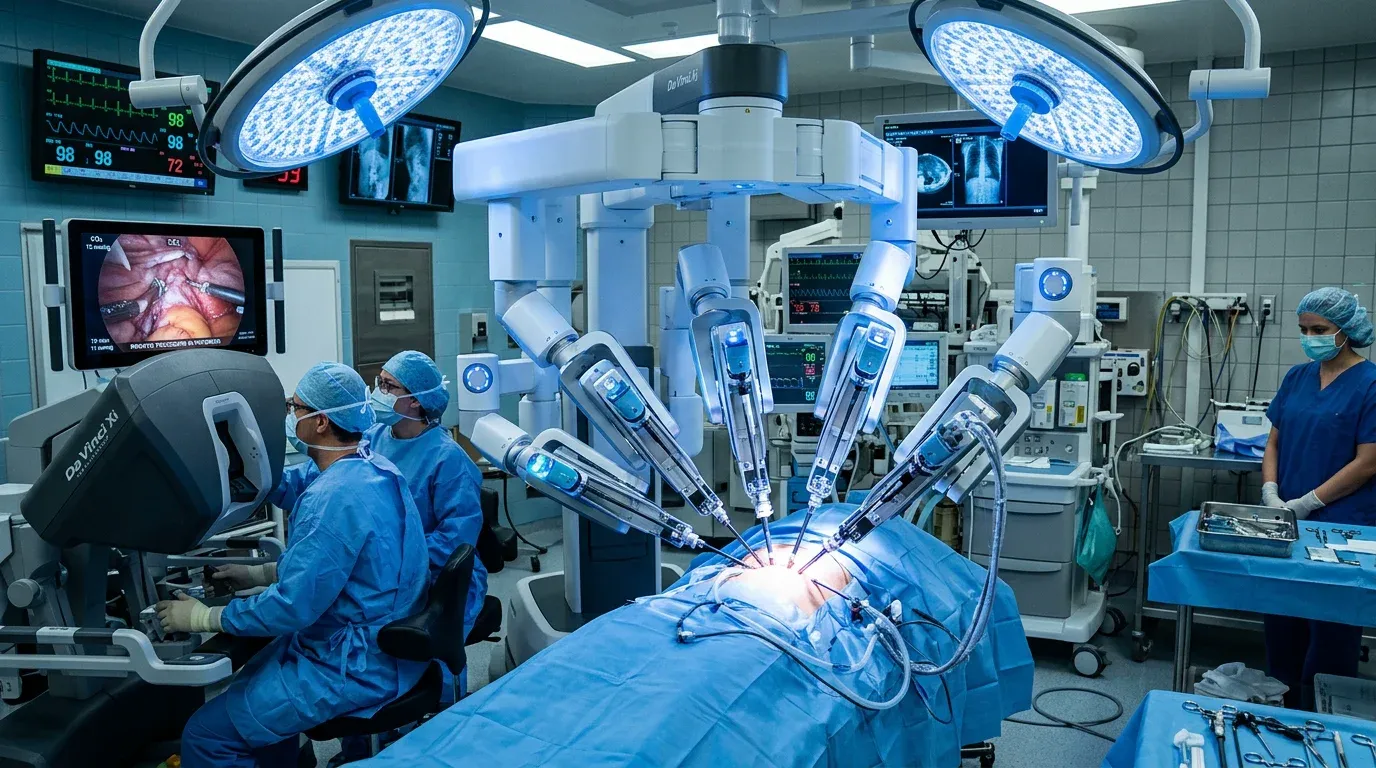
Robotic-assisted surgery combines AI with advanced robotics. Systems like the da Vinci Surgical System allow surgeons to perform complex procedures with unprecedented precision and control. AI enhances these systems by providing real-time data analysis, improving surgical planning, and minimizing the risk of human error. This leads to smaller incisions, reduced pain, and faster recovery times for patients.
Developing a new drug traditionally takes over a decade and costs billions of dollars. AI accelerates this process by simulating how different chemical compounds interact with specific biological targets. Recently, AI algorithms have successfully identified new antibiotic candidates and potential treatments for rare diseases in a matter of months, potentially saving millions of lives in the long run.

No. AI is designed to augment human healthcare professionals, not replace them. While AI can analyze data and suggest diagnoses rapidly, it lacks the empathy, ethical judgment, and complex decision-making abilities that human doctors provide. AI handles the heavy computational lifting, freeing doctors to focus on direct patient care.
Data privacy is a paramount concern. Healthcare organizations must comply with strict regulations (like HIPAA in the United States) when deploying AI. Advanced techniques such as federated learning allow AI models to learn from decentralized data sources without ever moving or exposing individual patient records, ensuring robust data security.
AI systems are only as unbiased as the data they are trained on. If an algorithm is trained on data from a narrow demographic, it may perform poorly for individuals outside that group. Addressing algorithmic bias is a major focus in medical AI research, requiring diverse, representative datasets to ensure equitable healthcare outcomes for everyone.